How to Use Rosemary Oil for Hair Without Greasy Roots
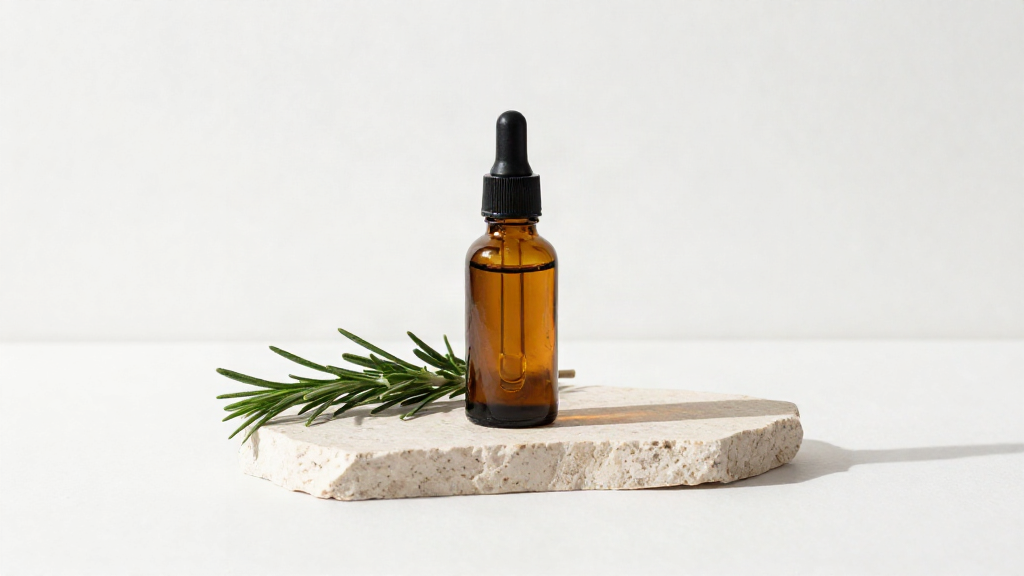
Rosemary oil has become one of the most talked-about scalp treatments in clean beauty, and for good reason. It is simple, it smells like a garden, and it supports stronger-looking hair without a long ingredient list. But most people who own a bottle are quietly unsure what to do with it - so they pour too much onto the roots, leave it on for hours, and end up with limp, greasy hair that takes three washes to recover.
The good news is that rosemary oil works best when you use less of it, more carefully. Here is a plain, step-by-step guide to using it properly, so your scalp feels cared for and your hair still looks clean.
What rosemary oil actually does
Rosemary oil is a botanical oil used to support the scalp and the look of hair. Applied to the scalp and massaged in, it helps condition the skin under your hair and leaves the hair feeling nourished from the root. It is not a shampoo or a treatment that "fixes" hair overnight - it is a routine step, like brushing your teeth. Used consistently, it helps hair look fuller, stronger, and healthier over time.
One thing to get right from the start: rosemary oil is potent. Oils are generally diluted before they touch your scalp, either as a ready-made blend or mixed into a carrier oil. Abragi's Rosemary Hair & Scalp Strengthening Oil is already formulated to be scalp-friendly, so you do not need to mix anything yourself - the dilution is done for you.
How much to use (the answer is: very little)
This is where most greasy-root problems begin. Rosemary oil is not like a hair mask that you slather on generously. A small amount goes a long way.
- Short hair: 3 to 5 drops is plenty.
- Medium hair: 5 to 8 drops.
- Long or thick hair: 8 to 12 drops, applied in sections.
Measure the oil into your palm first, then dip your fingertips into it. You want a light sheen on your fingertips, not a puddle. If you can see oil pooling in your hand, you have used too much.
Where to apply it
Rosemary oil belongs on the scalp, not on the length of your hair. The scalp is where the massage and the care happen; the strands of your hair just get weighed down if they are coated in oil.
Focus on these areas:
- The hairline and temples, where the scalp is easy to reach.
- The crown and part lines, working in small sections.
- Behind the ears, if your scalp feels dry there.
Keep the oil away from the mid-lengths and ends. If a little travels onto your hair as you work, that is fine - just do not deliberately coat the strands. People with fine or oily hair should be especially strict about this: scalp only.
The massage technique
The massage is not just a nice extra - it is how the oil gets spread evenly and how the scalp gets the care you are after. Work with your fingertips, not your nails.
- Part your hair into four or five sections so you can reach the scalp easily.
- Dip your fingertips into the oil and press them gently onto the scalp at the part line.
- Using small circular motions, massage the scalp for about 30 seconds per section.
- Move outward from the part to the hairline, then to the crown and the back.
- Finish with a two-minute overall massage, using light pressure the whole time.
You are moving the skin of the scalp over the bone beneath it, not scrubbing your hair. If your fingertips are dragging, add one more drop of oil. If your hair is getting slick, you have applied too much.
How long to leave it on before washing
Here is the rule that saves you from greasy roots: 30 minutes to a few hours is enough. You do not need to sleep in it.
- Minimum: 30 minutes, which is often all a busy evening allows.
- Ideal: 1 to 2 hours, so the oil has time to settle into the scalp.
- Maximum: 4 to 6 hours. Beyond that, the oil starts to travel down the hair shaft and onto your pillow, and it does not make the treatment work any better.
When you are ready, wash it out properly. Wet your hair, apply your usual cleanser to the scalp first, and work it in before you add more water. Rinse, then repeat once if needed. For most people, one thorough wash with a scalp-focused cleanser like Abragi's Acne Purifying Face Wash is enough - it is formulated for the skin, so it lifts oil without stripping everything else. If your hair still feels heavy, a second wash is fine; it will settle after a week of using less oil.
How often to do it each week
Consistency beats intensity. Twice a week is the sweet spot for most people.
- Once a week: a good starting point if your scalp is oily or your hair is fine.
- Twice a week: the standard routine, with a few days between treatments.
- Three times a week: only if your scalp is dry and your hair is thick.
Pick fixed days, for example Sunday and Wednesday evenings, and treat it as part of your wash routine. Give it four to six weeks of consistent use before you decide how it is working. Hair and scalp care is slow - the payoff shows up gradually, not after one application.
Common mistakes to avoid
A few habits cause most of the greasy-root complaints:
- Applying oil to dry hair and leaving it in all day. Do it before a wash, not before work.
- Using far more drops than you need. Start with the minimum and build up.
- Coating the lengths and ends, which do not need scalp oil.
- Skipping the wash-out, or rinsing with water only.
- Applying to a scalp with buildup. Clarify first with an exfoliating step such as Abragi's Glycolic Acid Exfoliating Toner, then start the oil routine on a clean scalp.
Making it a simple routine
Rosemary oil does not need to be complicated. A few drops, a gentle scalp massage, and a proper wash an hour or two later - twice a week, on the same days - is the whole method.
Simple care, clearly explained: use less, apply to the scalp, leave it on for an hour, and wash it out well. Do that consistently and you get the stronger-looking, cared-for hair you were after, without the greasy roots that made you give up on oil in the first place.